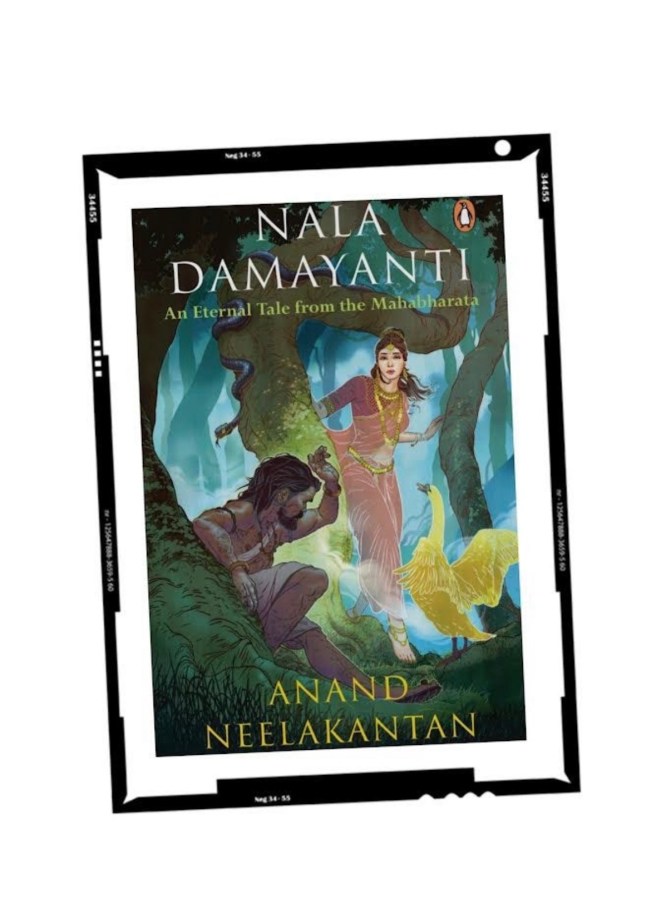
Indian mythology is one of my favorite genres, and Nala Damayanti is a story I’ve long cherished—especially the version narrated by Narayana Acharya in my mother tongue, Kannada. So when I came across a retelling by Anand Neelakantan, I was instantly excited to revisit the tale through his voice. After finishing the book, I felt compelled to share it with you—perhaps you’ll be inspired to pick it up too!
“The lady has chosen her husband. Learn to respect the choice of the woman, you scoundrels, else I will teach you honour,” he thundered.
This line stays with you long after, doesn’t it?
Summary
Brahma, the Creator, wakes from aeons of cosmic sleep only to find that his last creation—humans—have spiraled into chaos. They now fight in the name of newly imagined gods, especially one called Kali, who influences their every action. Disappointed, Brahma decides to erase humanity from Earth.
But Hemanga, a golden swan and Brahma’s loyal creation, pleads with him to reconsider. Brahma agrees—on one condition: if Hemanga can prove that pure love still exists among humans, they’ll be spared.
Thus begins Hemanga’s quest to Earth. On his journey, he meets Narada, the mischief-maker disguised as a sage. Narada tells him that only a few can withstand the influence of Kali—and among them are Nala and Damayanti. If Hemanga can unite the two, it could mark the beginning of a new, love-filled race of humans.
What follows is a magical tale of love, separation, struggle, and reunion—with many twists and turns you’ll enjoy discovering for yourself.
My Impressions
The author’s writing is effortless and engaging. The conversations are witty and full of charm, and the descriptive narration paints vivid scenes in your mind. I was so immersed in the story, it felt like watching it unfold in front of my eyes. I genuinely believe you could finish this book in a day—it’s that gripping.
Each character is beautifully etched. You can’t help but admire Damayanti’s strength and steadfastness in love. Hemanga’s unwavering devotion to humanity is heartwarming. And Rituparna—oh! What a character! The king of Ayodhya is portrayed with such depth, he lingers in your thoughts.
At its core, the book offers subtle yet powerful messages: that humans should be judged by the quality of their deeds, not by their birth. That in the eyes of God, all are equal. And perhaps most important—that we should learn to respect each other’s choices.
“It isn’t important that humans believe in me or such nonsense. It is only important that they believe in themselves.”
What a lovely reminder for us all.
Final Thoughts
Nala Damayanti is a delightful treat for lovers of Indian mythology. If you enjoy short, meaningful reads that blend humour, romance, and timeless wisdom—this one’s for you. It’s also a perfect starting point for beginners interested in mythology-based fiction.
Have you read this book? I’d love to hear your thoughts in the comments below.
 Chai and Chatter Chronicles